
IPTV vs Traditional TV: What's the Difference? | Strong8K
Compare IPTV and traditional television to understand how they deliver TV content, what equipment they use, how internet connectivity affects streaming and which option may better suit different viewing needs.
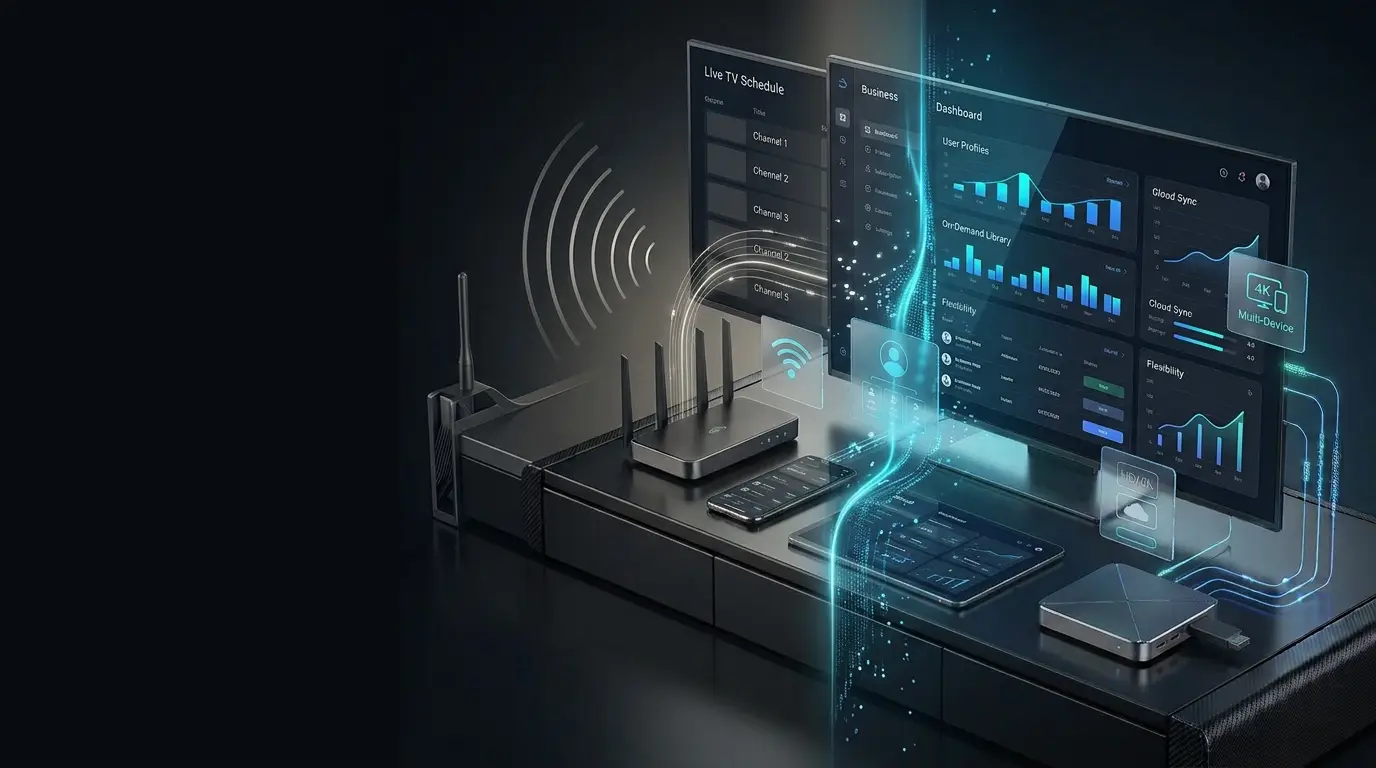
Television has changed significantly as internet connectivity
has become part of everyday entertainment. Traditional TV
services have historically relied on broadcast, cable or
satellite delivery, while IPTV uses an internet network to
deliver television and video content.
But what does that difference actually mean for viewers?
In this guide, we compare IPTV vs traditional TV,
explain how each approach works, and look at the factors
that can help you decide which type of television experience
is more suitable for your needs.
What Is IPTV?
IPTV stands for Internet Protocol Television. It refers to delivering television or video content through an internet protocol network rather than relying exclusively on conventional broadcast, cable or satellite transmission.
With IPTV, video data is delivered through an internet connection to a compatible application or device. Depending on the service, viewers may be able to access live television, on-demand programming or other forms of internet-delivered video.
The exact experience depends on the IPTV provider, application, device and network configuration being used.
What Is Traditional TV?
Traditional television generally refers to established methods of television distribution such as terrestrial broadcast, cable television and satellite television.
These systems use dedicated transmission methods to deliver television signals to viewers. Depending on the type of service, the signal may arrive through an antenna, cable connection or satellite dish.
Traditional TV remains widely used because it can provide a familiar viewing experience without requiring the television service itself to depend entirely on a household internet connection.
IPTV vs Traditional TV: How Do They Differ?
The biggest difference is the way television content reaches the viewer. IPTV uses an internet-based delivery method, while traditional TV typically uses broadcast, cable or satellite infrastructure.
| Feature | IPTV | Traditional TV |
|---|---|---|
| Delivery | Internet-based delivery | Broadcast, cable or satellite |
| Internet Requirement | Generally requires an internet connection | Depends on the type of traditional TV service |
| Devices | Compatible Smart TVs, streaming devices, mobile devices and other supported platforms | Television with antenna, cable box, satellite receiver or related equipment |
| Content Delivery | Delivered through an IP network | Delivered through conventional TV distribution infrastructure |
| Network Dependence | Strongly dependent on internet/network quality | Depends on the underlying broadcast, cable or satellite infrastructure |
How Does IPTV Work?
IPTV works by transmitting video data over an IP network. Instead of receiving a television signal exclusively through a conventional broadcast or cable system, the compatible device receives data through an internet connection.
A simplified IPTV viewing process can look like this:
- The IPTV service prepares and distributes video content.
- The content is delivered through an internet-connected network.
- A compatible application or device receives the stream.
- The device processes the data and displays the video on the screen.
The actual technology behind an IPTV service can be more sophisticated, involving servers, content delivery systems, authentication and different streaming protocols.
How Does Traditional TV Work?
Traditional TV uses a transmission infrastructure designed specifically for television distribution.
Terrestrial television can use broadcast towers to transmit signals that are received by an antenna. Cable television sends signals through a cable network, while satellite television uses satellites to transmit signals to a receiver installed at the customer's location.
The technology varies considerably between these systems, but the key difference is that the television signal is delivered through a dedicated broadcast, cable or satellite distribution method rather than primarily through an internet connection.
Does IPTV Require Internet?
In most consumer IPTV situations, yes. Because the service delivers video through an IP network, the quality of the internet connection can directly affect the viewing experience.
A stable connection is generally more important than simply having a high maximum download speed. Network congestion, Wi-Fi interference, router performance and other factors can influence streaming performance.
Speed Isn't the Only Factor
A fast internet package does not automatically guarantee perfect streaming. Connection stability, latency, Wi-Fi quality, network congestion and the performance of the streaming device can also affect playback.
IPTV and Device Flexibility
One of the major attractions of internet-based streaming is the variety of devices that can potentially be used.
Depending on the service, compatible platforms may include Smart TVs, Android TV devices, smartphones, tablets and other supported streaming hardware.
This can make IPTV convenient for households where people watch content on more than one type of screen.
However, compatibility is always service-specific. Before subscribing, check the provider's current device support. You can also review the Strong8K Apps & Devices page for information about supported platforms.
Traditional TV and Equipment
Traditional television may require dedicated equipment depending on the delivery method.
Terrestrial TV
Typically uses an antenna to receive broadcast television signals from transmission towers.
Cable TV
Uses a cable network to deliver television signals to the customer's home.
Satellite TV
Uses satellite transmission and a receiver system to deliver television programming.
IPTV
Uses an internet-connected network and compatible software or streaming hardware.
IPTV vs Traditional TV: Which Has Better Quality?
There is no universal answer to which technology provides better picture quality.
IPTV quality can depend on the service's stream quality, encoding, delivery infrastructure, internet connection, local network and playback device.
Traditional TV quality can similarly depend on the broadcaster, transmission method, signal conditions, channel format and receiving equipment.
Modern IPTV and traditional television can both provide high-quality video when the underlying service and equipment are properly configured.
IPTV vs Traditional TV: Which Is More Flexible?
IPTV can offer greater flexibility in terms of where a viewer accesses a service, provided the necessary application, device and network are supported.
A household may be able to use compatible Smart TVs, mobile devices or streaming hardware rather than being limited to one traditional television setup.
Traditional TV can still be highly convenient, particularly for households that prefer a dedicated television service with established equipment and minimal dependence on internet connectivity.
IPTV vs Traditional TV: What About Reliability?
Reliability depends heavily on the technology and infrastructure being used.
IPTV depends on an internet connection and the quality of the service's streaming infrastructure. If the local connection becomes unstable, streaming may be affected.
Traditional television is generally less dependent on the household internet connection, although cable, satellite and terrestrial systems can also experience outages, interference or signal problems.
For IPTV users, a reliable home network is therefore an important part of creating a consistent streaming experience.
Which Option Is Better for Your Home?
The right choice depends on how you watch television and what infrastructure you already have.
IPTV May Suit You If...
You already have a reliable internet connection, use multiple compatible devices and prefer an internet-based streaming experience.
Traditional TV May Suit You If...
You prefer a conventional television setup and want your TV service to operate independently from your household internet connection.
A Mixed Setup May Work If...
You want traditional television for certain viewing needs while also using streaming services for additional flexibility.
Check Compatibility First
Before choosing an IPTV service, verify your device, application compatibility, internet connection and the provider's current service requirements.
Things to Check Before Choosing an IPTV Service
If you decide that IPTV is suitable for your household, take a few minutes to evaluate the service before subscribing.
- Confirm that the service is properly authorized for the content it provides.
- Check which devices and applications are supported.
- Review available subscription options and terms.
- Make sure your internet connection is suitable for your intended viewing.
- Check what customer support is available.
- Avoid services making unrealistic guarantees about performance or availability.
IPTV vs Traditional TV: The Bottom Line
IPTV and traditional television both provide ways to watch television content, but they rely on different delivery technologies.
IPTV uses internet-based networks, which can provide a flexible experience across compatible connected devices. Traditional television generally relies on terrestrial, cable or satellite distribution systems and can operate independently from a household internet connection.
Neither option is automatically better for every viewer. The best choice depends on your internet connection, preferred devices, viewing habits, available services and the type of television experience you want.
Want to Learn More About IPTV?
If you are new to IPTV, start with our guide to what IPTV is and how it works . You can also explore Strong8K subscription plans or check supported devices and apps before getting started.
Frequently Asked Questions
What is the main difference between IPTV and traditional TV?
IPTV delivers television or video content through an internet protocol network, while traditional TV generally uses terrestrial broadcast, cable or satellite distribution.
Does IPTV require an internet connection?
Consumer IPTV services generally require an internet connection because the video is delivered through an IP network.
Is IPTV better than cable TV?
It depends on your needs. IPTV can provide greater device flexibility and internet-based access, while cable TV can provide a conventional television experience that does not depend entirely on your household internet connection.
Can I watch IPTV on a Smart TV?
Many IPTV services support compatible Smart TVs, although compatibility depends on the specific service and application. Always check supported platforms before subscribing.
Does IPTV use Wi-Fi?
IPTV can be accessed through Wi-Fi when the compatible device connects to the internet wirelessly. Ethernet can also be used on supported devices and may provide a more stable local network connection.
Can IPTV work without traditional cable TV?
IPTV can operate independently of a traditional cable television subscription, provided you have the required internet connection, compatible device and an authorized IPTV service.
Which has better picture quality, IPTV or traditional TV?
Neither technology automatically has better quality. Picture quality depends on the service, source, transmission, network conditions, encoding and playback equipment.
Is IPTV legal?
IPTV is a technology and is not inherently illegal. The legality of a particular service depends on the content being distributed, the rights held by the provider and applicable laws.
Ready to Explore Internet-Based TV?
Learn more about Strong8K, explore available subscription options and check supported devices before getting started with your streaming setup.