
IPTV Buffering: Common Causes and How to Fix It | Strong8K
Is your IPTV stream constantly buffering, freezing or taking too long to load? Learn the most common causes of IPTV buffering and practical steps you can take to improve your streaming experience on Smart TVs, Android TV and other supported devices.
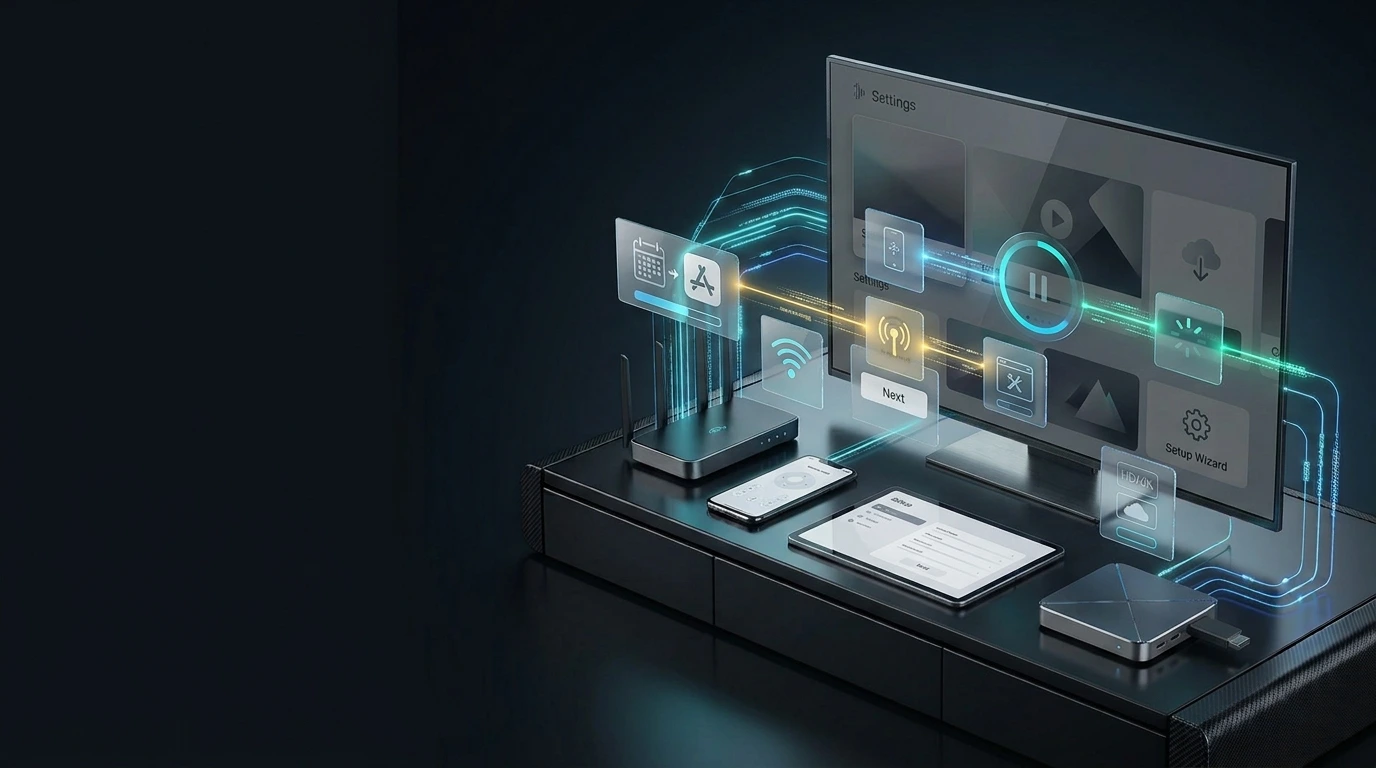
What Is IPTV Buffering?
IPTV buffering happens when your streaming device cannot receive or process enough data quickly enough to maintain continuous playback. Instead of the video continuing normally, the stream pauses while the application waits for additional data.
A short loading moment can occasionally happen with any internet-based streaming service. However, frequent buffering, freezing or repeated loading usually means something in the connection or playback setup needs attention.
Before assuming that your Strong8K subscription is the problem, it is useful to check the entire path between your internet connection and your television or streaming device.
Why Does IPTV Keep Buffering?
There are several possible causes of IPTV buffering. Some are related to your home network, while others can be caused by the device or application being used.
1. Slow or Unstable Internet
Your internet connection may not consistently provide enough bandwidth for the stream, particularly when several devices are using the network at the same time.
2. Weak Wi-Fi Signal
A Smart TV located far from the router or separated by several walls may receive a weaker and less stable wireless connection.
3. Network Congestion
Downloads, cloud backups, gaming, video calls and other high-bandwidth activities can compete with your IPTV stream.
4. Device or App Issues
An outdated application, overloaded device or temporary software problem can sometimes affect streaming performance.
1. Check Your Internet Connection
The first thing to check when IPTV is buffering is your internet connection. Streaming requires a reasonably stable connection rather than simply a high advertised download speed.
If other services such as YouTube or another legitimate streaming platform are also loading slowly, the issue may be related to your internet connection rather than your IPTV application.
Run an internet speed test on the same device you use for streaming if possible. Testing on the TV or streaming box gives you a more useful picture than testing only on a phone located next to the router.
2. Test Wi-Fi Strength
Wi-Fi performance can change significantly depending on the distance between your router and Smart TV. Walls, floors, furniture and other electronic equipment can also affect wireless performance.
If your television is far away from the router, try temporarily moving the device closer or testing another device in the same location.
If buffering improves when the device is closer to the router, the wireless connection may be an important part of the problem.
3. Try an Ethernet Connection
If your Smart TV or streaming device supports Ethernet, a wired connection can provide a more consistent network connection than Wi-Fi.
Ethernet can be particularly useful for televisions that are permanently located close to the router. It removes many of the variables associated with wireless signal strength and interference.
Quick Tip
If IPTV works smoothly over Ethernet but buffers frequently over Wi-Fi, focus your troubleshooting on the wireless network rather than immediately changing your streaming service.
4. Restart Your Router and Device
A simple restart can resolve temporary network or software problems.
Turn off your Smart TV or streaming device, restart your router, wait for the internet connection to become stable, and then start the streaming device again.
This can clear temporary connection problems and give your device a fresh network session.
5. Close Other Internet Activities
If several devices are using your internet connection simultaneously, your IPTV stream may have less available bandwidth.
Check whether someone is downloading large files, watching high-resolution video, uploading media, using cloud backups or playing online games while the buffering occurs.
Temporarily reducing heavy network activity can help determine whether congestion is contributing to the problem.
6. Update Your Streaming Device
Older Smart TV software or outdated streaming-device firmware can sometimes cause compatibility or performance problems.
Open your device settings and check for available system updates. If an update is available, install it and restart the device before testing your stream again.
7. Check Your Streaming Application
The application used to access a streaming service can also affect playback. Make sure you are using a supported and properly configured application for your device.
If the application has an available update, install it. You can also try closing and reopening the application to see whether the problem disappears.
For device compatibility and supported platforms, visit the Strong8K Apps & Devices page.
8. Check Available Device Storage
Some Smart TVs and streaming devices have limited storage and system resources. When a device becomes overloaded with applications or temporary data, performance can sometimes suffer.
Remove applications you no longer use and restart the device. If your device provides an option to clear application cache, that can also be useful when troubleshooting an application that is behaving unusually.
9. Check Your Network During Peak Hours
Internet performance can change throughout the day. If buffering happens mainly during certain hours, your local network or internet provider may be experiencing increased congestion.
Try testing your connection at different times. If the problem consistently appears during a particular period, record when it happens before contacting your internet provider or service support.
10. Check Whether the Problem Is Limited to One Stream
Another useful troubleshooting step is to determine whether every stream buffers or only a particular channel, program or content source.
If other streams work normally but one specific stream repeatedly has problems, the issue may not be your home internet connection.
Testing several different streams can therefore help narrow down the source of the problem.
How Much Internet Speed Does IPTV Need?
There is no single internet-speed number that guarantees perfect IPTV playback. The required bandwidth depends on video resolution, encoding, network conditions, the number of connected devices and the stability of the connection.
Higher-resolution video generally requires more bandwidth than standard-definition streaming. At the same time, a stable connection is often more important than simply having a very high advertised download speed.
- Check your actual connection speed on the streaming device.
- Reduce unnecessary network activity during streaming.
- Use Ethernet when practical.
- Improve the Wi-Fi signal if Ethernet is not available.
- Test the connection at different times of day.
Does a VPN Cause IPTV Buffering?
A VPN can sometimes affect streaming performance because your internet traffic may travel through an additional server before reaching its destination.
If you are using a VPN and experience buffering, you can compare performance with and without the VPN where permitted and appropriate. You can also test a different VPN server location if your VPN provider supports that option.
Keep in mind that VPN use, availability and legality can vary by location and service, so follow applicable laws and the terms of the services you use.
IPTV Buffering on Smart TV
Smart TVs can be convenient for IPTV and other streaming services because they combine the display and streaming platform in one device. However, built-in Smart TV hardware can have different network capabilities and processing performance depending on the model.
If your Smart TV frequently buffers, check its network connection first. Then check system updates, application updates, available storage and Wi-Fi signal strength.
You can also review the Strong8K supported devices information before changing your setup.
When Should You Contact Support?
If you have checked your internet connection, restarted your equipment, updated the application and tested different network conditions but the problem continues, it may be time to contact support.
Before contacting support, collect useful information such as your device model, application name, approximate time of the problem and whether other streams or applications work normally.
This information can make troubleshooting considerably easier.
Strong8K IPTV Buffering Checklist
- Test the internet connection on the actual streaming device.
- Restart your router and Smart TV or streaming device.
- Check Wi-Fi signal strength.
- Try Ethernet if available.
- Pause downloads and other heavy network activity.
- Update the Smart TV or streaming device.
- Update the supported streaming application.
- Check available device storage.
- Test multiple streams to identify whether the problem is isolated.
- Record the time and conditions if buffering continues.
How Strong8K Can Help You Troubleshoot
Strong8K is designed to provide a straightforward streaming experience across supported platforms. When troubleshooting playback, it is important to look at the complete setup rather than focusing on only one component.
Start with your internet connection, then check your device, application and configuration. If you are still having difficulty, review the Strong8K FAQ & Support resources for additional guidance.
Frequently Asked Questions
Why is my IPTV buffering?
IPTV buffering can be caused by an unstable internet connection, weak Wi-Fi, network congestion, device performance, application problems or issues affecting a particular stream. Troubleshoot each part of your setup before assuming there is a single cause.
Will faster internet stop IPTV buffering?
Faster internet can help when insufficient bandwidth is the problem, but speed alone does not guarantee smooth streaming. Connection stability, Wi-Fi quality, network congestion and device performance also matter.
Is Ethernet better than Wi-Fi for IPTV?
Ethernet can provide a more consistent connection because it avoids many wireless signal and interference issues. If your device supports Ethernet, it can be a useful troubleshooting step.
Why does IPTV buffer only at certain times?
If buffering happens at predictable times, local network congestion, household internet usage or wider network congestion may be contributing. Compare performance at different times to identify a pattern.
Why does one stream buffer while another works?
If other streams play normally, the issue may be limited to a particular content source or stream rather than your entire home setup. Testing multiple streams can help identify this difference.
Should I restart my router when IPTV buffers?
Yes. Restarting the router and streaming device is a simple troubleshooting step that can clear temporary network or device issues.
Can an outdated IPTV app cause buffering?
An outdated or malfunctioning application can contribute to playback problems. Check whether an updated version is available and restart the application after updating.
What should I do if buffering continues?
Check your internet connection, Wi-Fi or Ethernet setup, device software, application and network usage. If the problem remains, collect your device and connection details and contact the appropriate support team.
Explore A Better Streaming Setup.
Explore Strong8K plans, supported devices and helpful setup resources to build a streaming experience that fits your needs.
2 Responses